How to Spot Safe Bitcoin Casinos in Canada in 2026: A Player's Guide to Licensing, Fairness, and Responsible Gambling
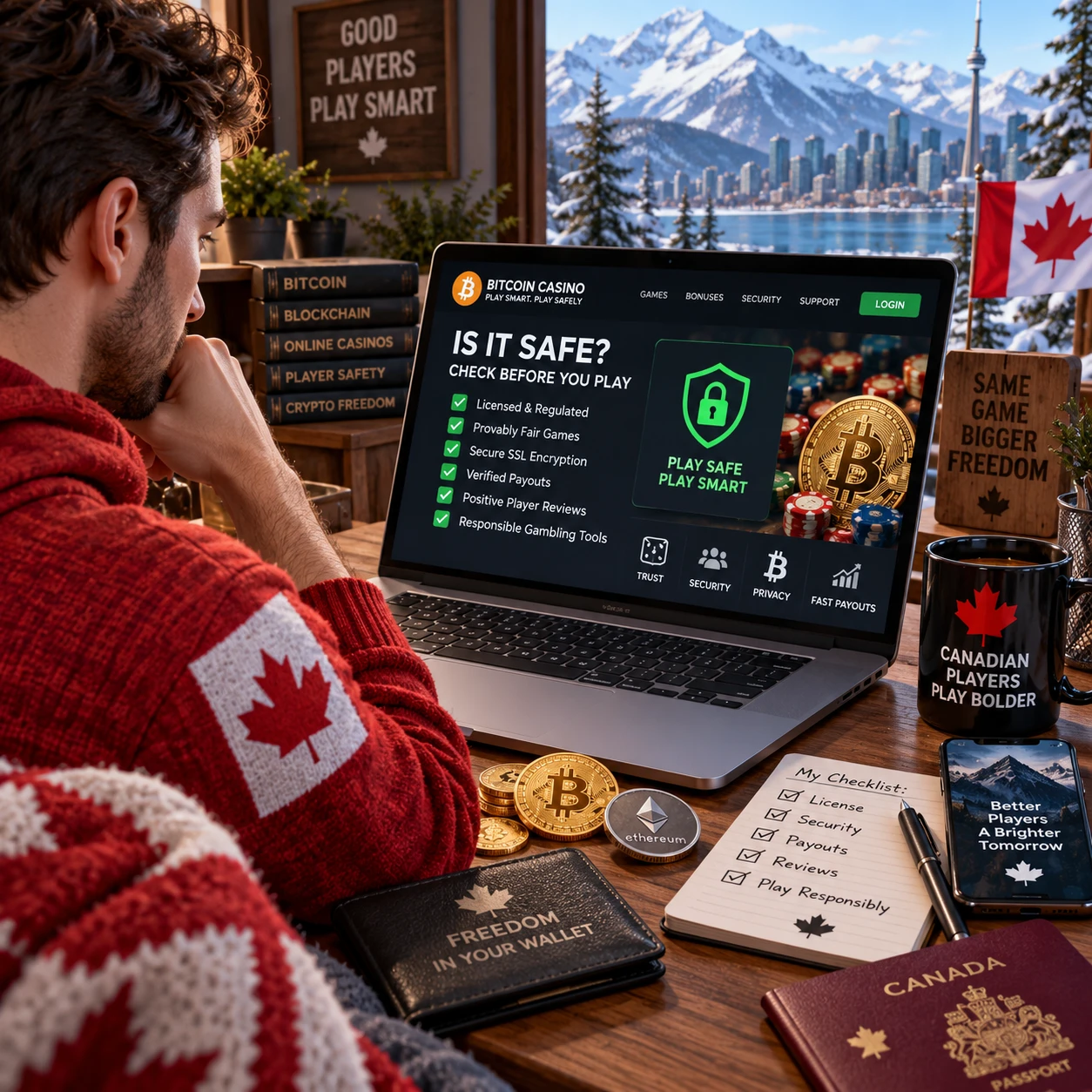
I've watched crypto gambling explode across Canada over the past couple of years, and honestly? I get it. Deposits clear in minutes instead of days. Withdrawals aren't held hostage by some sluggish banking system. There's a layer of privacy traditional online casinos just can't touch. But here's the catch I keep coming back to whenever a friend asks me for recommendations — that same speed and anonymity cuts both ways. The exact features that make Bitcoin casinos appealing also make them irresistible to sketchy operators who vanish the second a big withdrawal request lands on their desk.
So in this guide, I'm walking through exactly what I check before trusting any crypto casino with my own money. Licensing, how to verify game fairness through blockchain tools, the red flags that should send you running, and the responsible gambling habits that matter even more once things move this fast.
What Makes a Bitcoin Casino 'Safe' in 2026?
Safety isn't a single checkbox here — it's a handful of things working together, none of which matter much on their own. A legitimate platform needs proper licensing, strong encryption guarding your wallet connections, terms written in plain language (not buried under fine print designed to confuse you), and a track record of paying winners without strange delays or excuses. Miss one of these and the rest barely counts.
Licensing and Regulatory Oversight
Most Bitcoin casinos running today hold licenses from Curacao, Malta, or occasionally Kahnawake — which, interestingly enough, sits right here in Canada and has turned into something of a hub for online gambling operators. Before I sign up anywhere, I check the license number directly on the regulator's own website rather than trusting a badge slapped on the casino's footer. Those images get faked or go stale all the time; a stale badge tells you nothing. Curacao licenses are the most common but also the least strict, so I treat them as a baseline, not a gold standard. Kahnawake and Malta tend to come with tighter ongoing compliance checks, which gives me a bit more peace of mind — not a guarantee, just a bit more.
Blockchain Transparency and Provably Fair Systems
One thing I genuinely love about crypto casinos? The provably fair system. This tech lets you verify, mathematically, that a game outcome wasn't tampered with after the fact. Each bet generates a cryptographic hash before the result even shows up, and you can plug that hash into a verification tool later to confirm nothing changed along the way. Traditional fiat casinos can't really offer the same thing — not in any comparable way. It's probably one of the strongest arguments for crypto gambling, assuming the platform actually implements it correctly and doesn't just slap the label on for show.
How to Verify Fairness and Game Integrity
Beyond provably fair mechanics, I still hunt for third-party RNG certification from recognized auditors like eCOGRA or iTech Labs. These groups test random number generators independently and publish payout percentage reports that casinos can't easily fudge. No audit seals? No published payout percentages when you ask? That's usually my cue to look elsewhere. Transparent operators tend to show this stuff off — it builds trust, and on some level, they know it.

Security Red Flags to Watch For
Over time I've built a mental checklist of warning signs, mostly from running into them myself. Unclear ownership is a big one — if I can't figure out who actually runs the platform or where the company's registered, I get suspicious fast. Missing SSL encryption is another dealbreaker. If your browser flags the connection as insecure, don't even bother creating an account.
Vague withdrawal policies that say 'processing times may vary' without any real specifics? Combined with support that's one email address and zero live chat? That tells me the operator isn't built to handle real player volume responsibly. It's a small detail, but it usually points to a bigger one.
Given how crowded this market's gotten, I always recommend cross-referencing a casino against independent review resources before you deposit anything. Sites dedicated to vetting bitcoin casinos can offer context — player complaints, payout history, licensing verification — that you'll never find on the casino's own marketing pages. I treat these third-party sources as a second opinion, not the final word, but they've saved me from a few questionable platforms over the years.
Responsible Gambling Practices for Crypto Players
Crypto gambling moves fast, and that speed makes it easy to lose track of how much you're actually spending. I set deposit limits before I even start playing, and I use self-exclusion tools the moment I notice I'm chasing losses instead of just enjoying the game. Recognizing problem gambling signs matters just as much here as with traditional casinos — maybe more, since instant transactions wipe out the natural pauses that bank transfers or card processing used to build in. There's no three-day waiting period to snap you back to reality anymore.
Tools and Resources for Canadian Players
Canadian players have solid support options. ResponsibleGambling.org offers free resources and self-assessment tools built for the Canadian market, and most provinces run their own helplines through organizations like the Ontario Problem Gambling Helpline or similar provincial services. On the platform side, I always look for casinos offering time-outs, loss limits, and cooling-off periods built right into account settings. These features should be easy to find — not buried three menus deep where only someone who already knows they're there would ever stumble on them.
Comparing Bitcoin Casinos vs. Traditional Online Casinos
The biggest differences boil down to speed, anonymity, and regulation. Bitcoin casinos process withdrawals in minutes rather than the days typical of bank transfers, and you often skip handing over a mountain of personal documentation upfront. Traditional casinos, on the other hand, usually run under more established regulatory frameworks with clearer dispute resolution processes. If speed and privacy matter most to you, crypto platforms make sense. If regulatory certainty and established consumer protections matter more, a licensed fiat casino might fit better. There's no universally 'right' answer here — it depends on what you're actually optimizing for, and that's a personal call, not a universal one.
Step-by-Step Checklist Before You Deposit
- Verify the casino's license number directly with the issuing regulator
- Confirm the platform uses provably fair technology with accessible verification tools
- Check for RNG certification from eCOGRA, iTech Labs, or a comparable auditor
- Review published payout percentages and recent player feedback
- Look for SSL encryption and clear company ownership details
- Test customer support responsiveness before depositing a cent
- Set deposit limits and explore self-exclusion options within your account settings
- Cross-reference the operator against independent review sources
Conclusion
After years of navigating this space, my biggest takeaway is pretty simple: flashy bonuses and massive sign-up offers mean nothing if the platform behind them can't be trusted. Licensing, fairness verification, and genuine security measures should always come before chasing promotions — always, no exceptions I've found. Run through the checklist above. Lean on independent resources when you're unsure. And keep your responsible gambling tools active from day one, not after things go sideways.
Crypto gambling in Canada offers real advantages in 2026, but only once you take the time to separate the legitimate operators from the ones hoping you won't ask too many questions.